Expanding Lyft’s privacy features to centralize how users access and understand their data
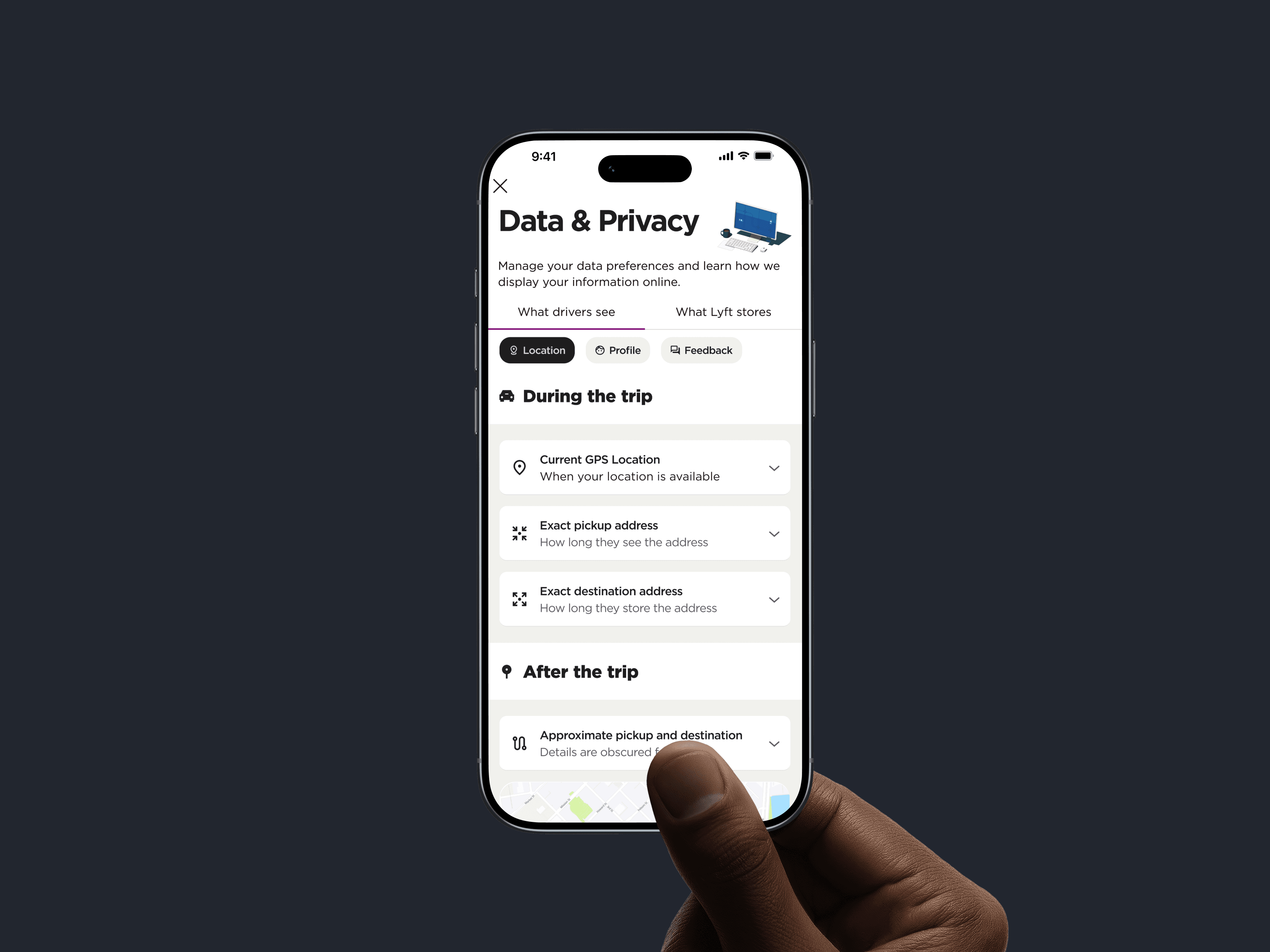
Creating a Data & Privacy page with a tabbed interface that centralizes access to data and privacy settings, allowing users to navigate one page while reducing the stress of searching through fragmented information
ROLE
UI/UX Designer
Product Design
DISCIPLINES
Interaction design
UX research
Usability testing
Prototyping
TOOLS
Figma
Illustrator
TIMELINE
3 Weeks
THE PROBLEM
Expanding on Lyft's existing Data transparency structure to lower user cognitive load.
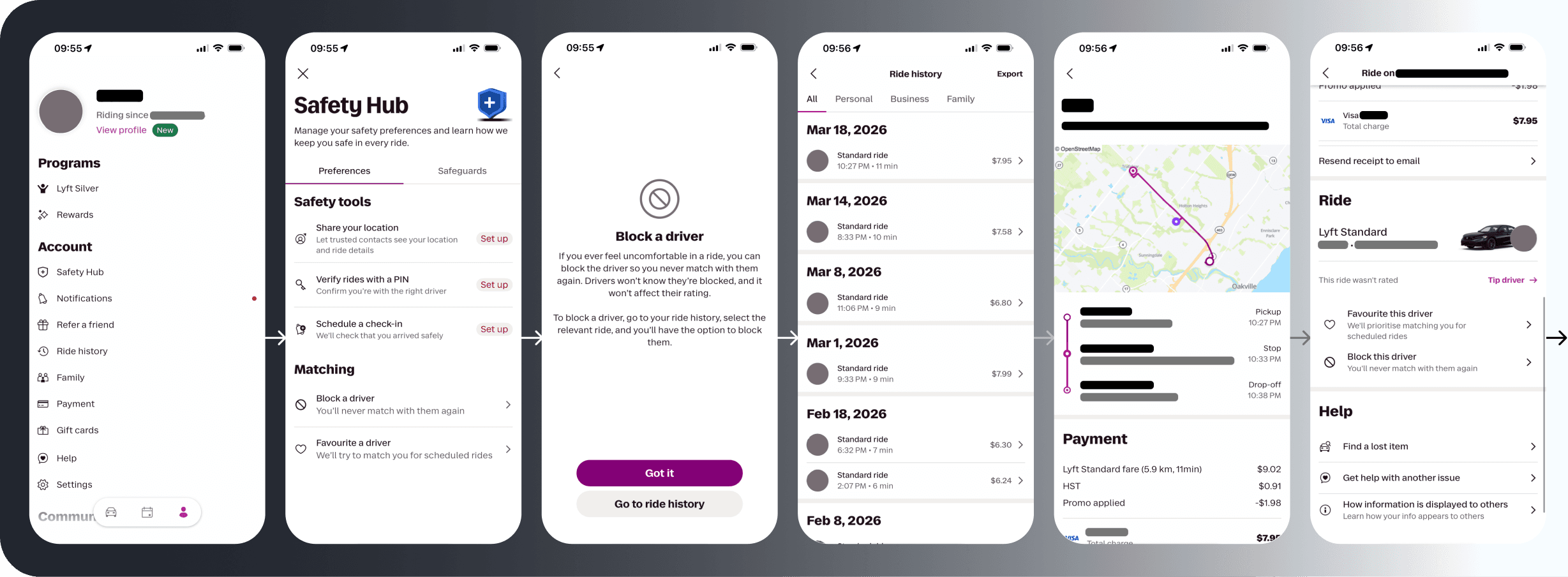
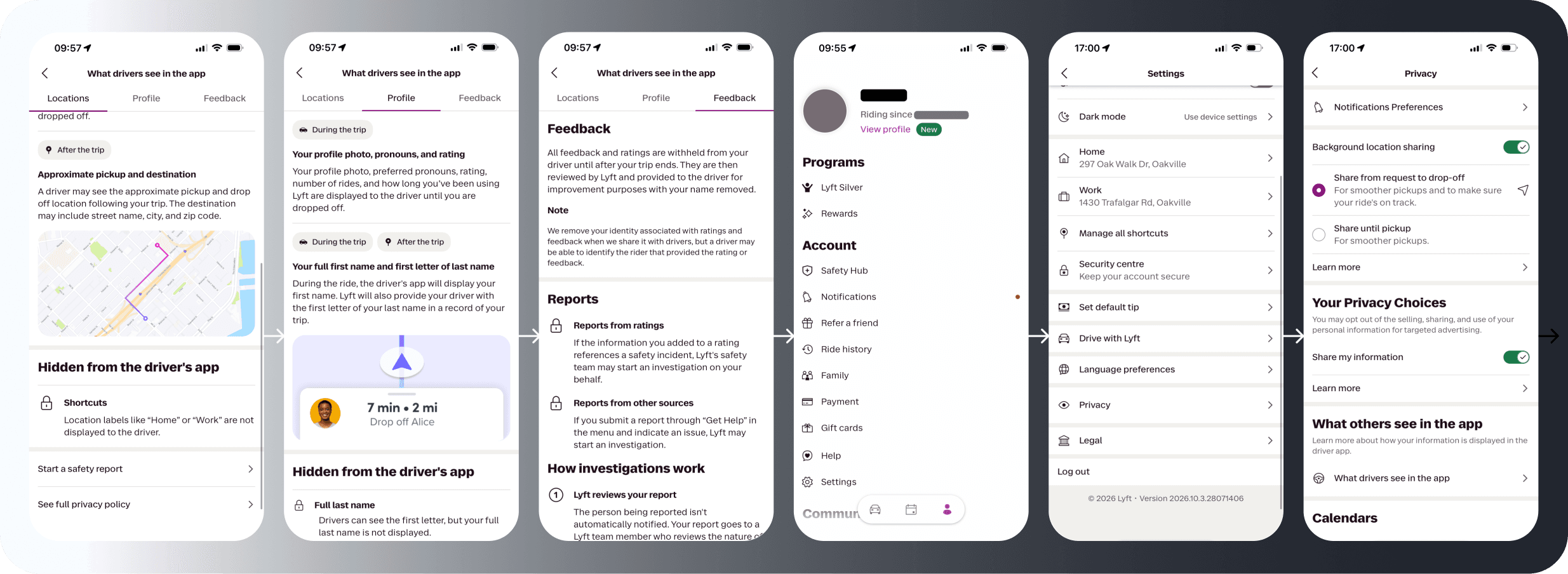
Research indicates users can find information about how their data is used and shared given enough time. However, it also showed how fragmented the current information architecture is.
Original screenflow
FINDINGS
Research shows users can find their data information given enough time. However, the current information architecture is fragmented.
HOW MIGHT WE
Design a single, intuitive space where users can explore their data and privacy settings with clarity and confidence?
FINAL SOLUTION
Data & Privacy page centralizing all user privacy concerns
Taking into consideration all iterations and usability testing, a final solution with reduced interaction was prioritized and prototyped.
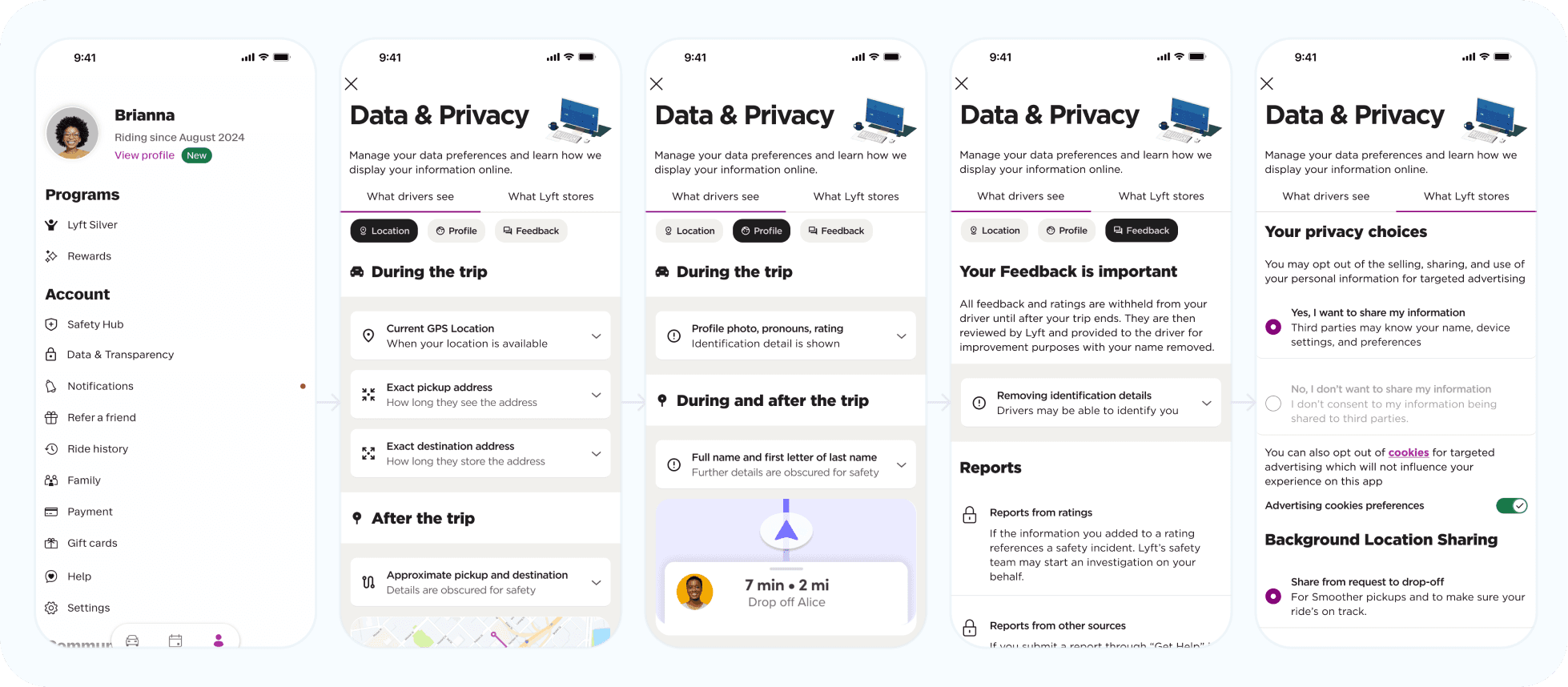
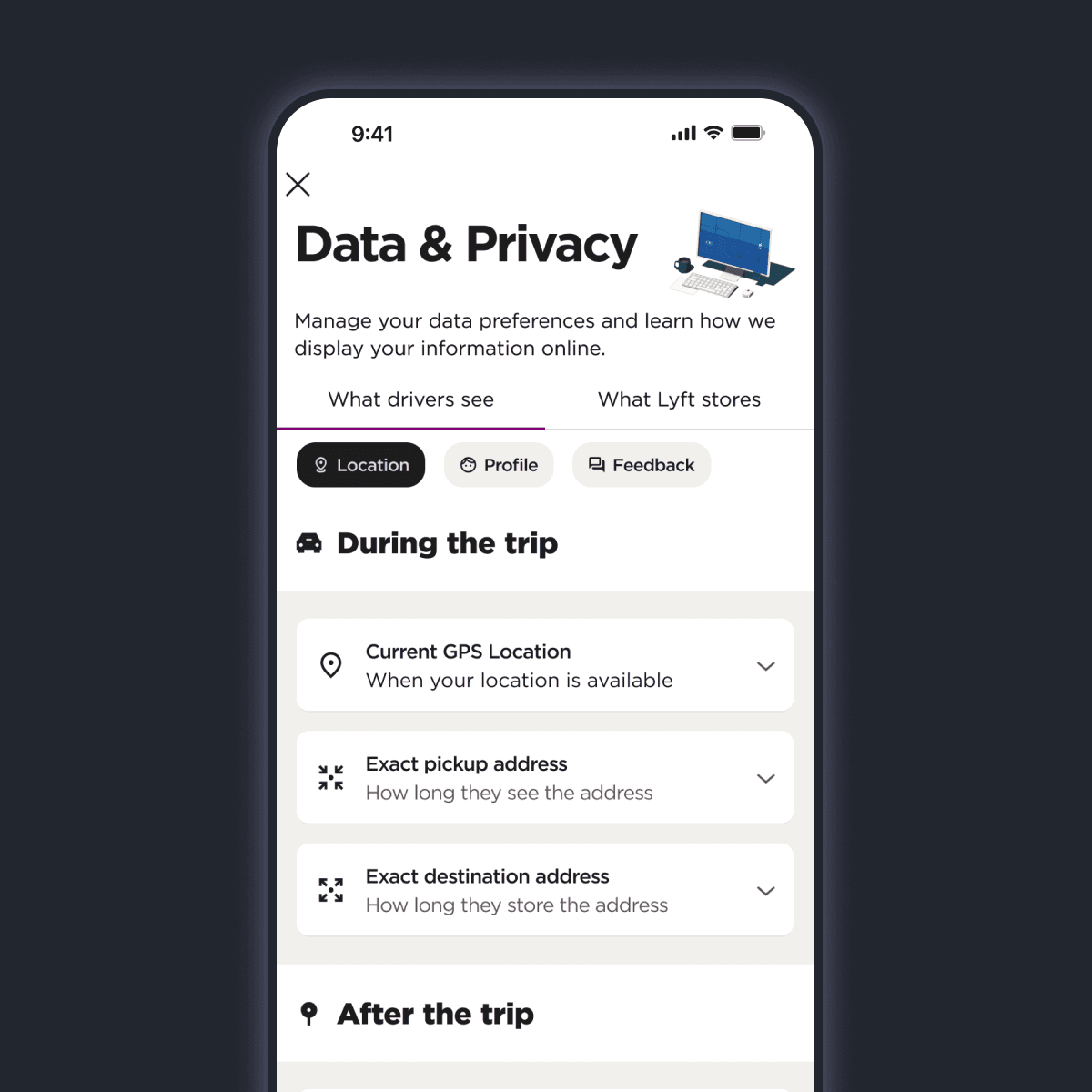
Tabbed Interface
Which is intuitive to navigate and minimizes user cognitive load, dividing content into 2
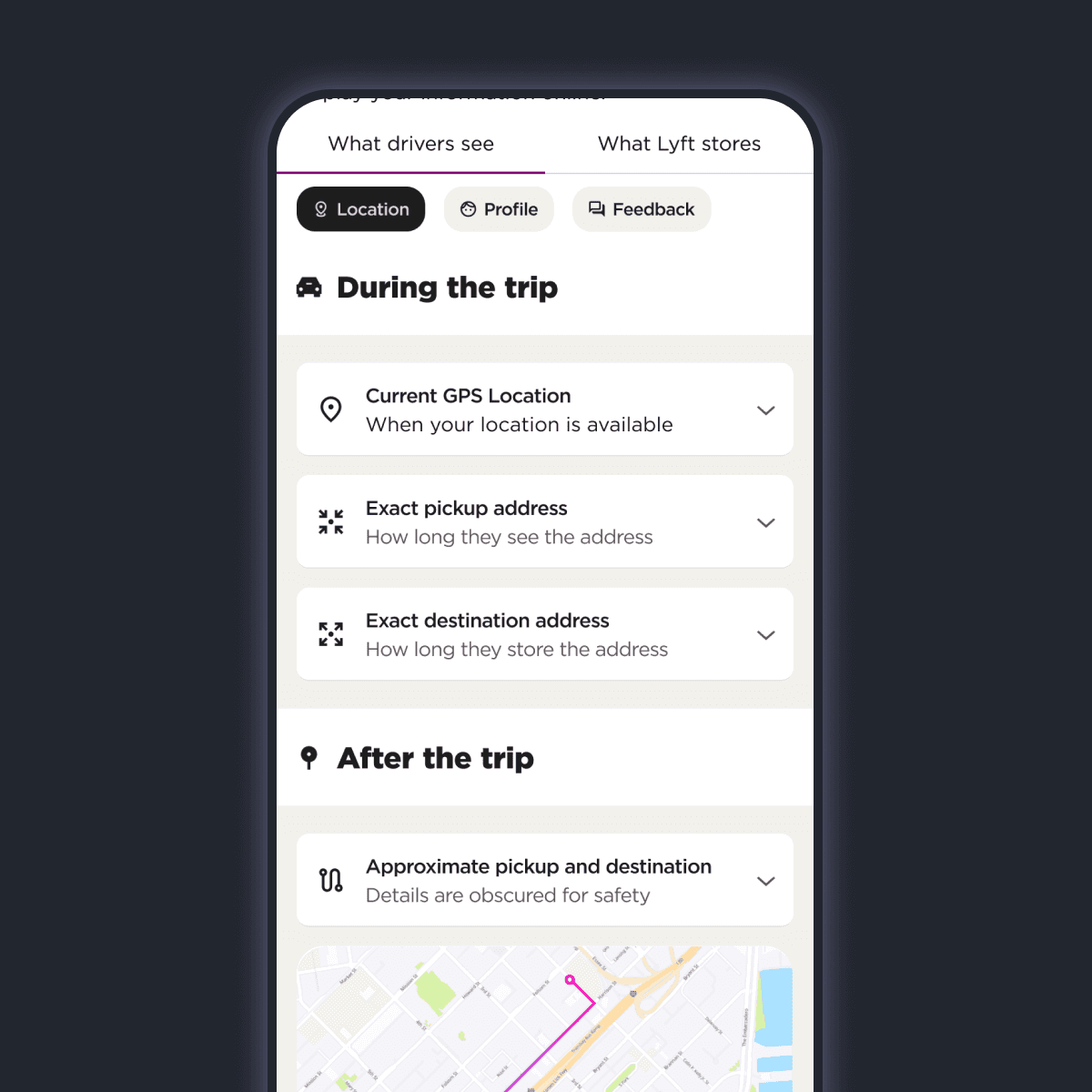
Button styled tabbed interface
To maintain ease of navigation but creating a distinct difference between the subpages and the main 2 categories above.
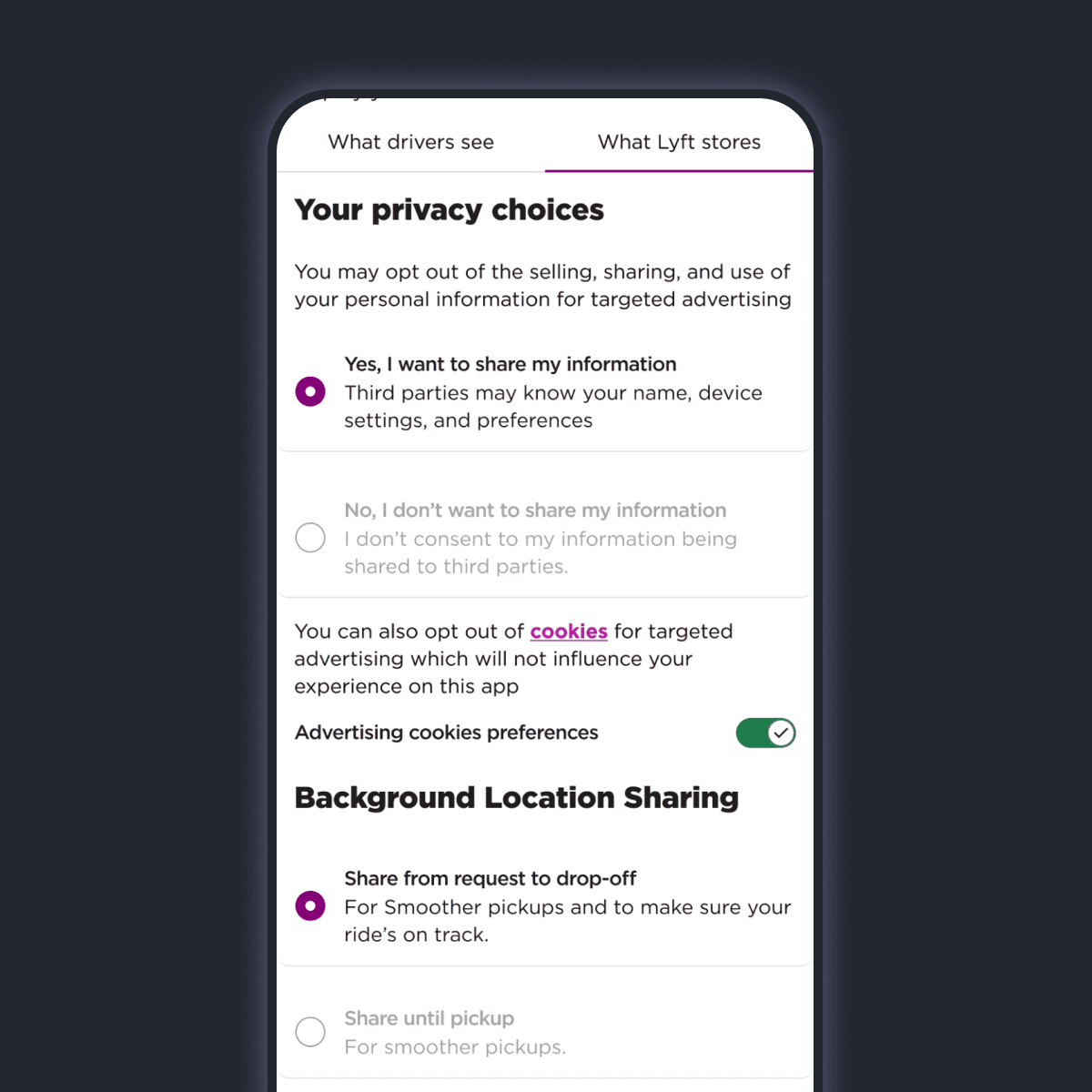
Mutually Exclusive Options
Clear colloquial language to clarify options for sharing data with third party companies, additionally utilizing mutually exclusive options to ensure users can’t chose both outcomes.
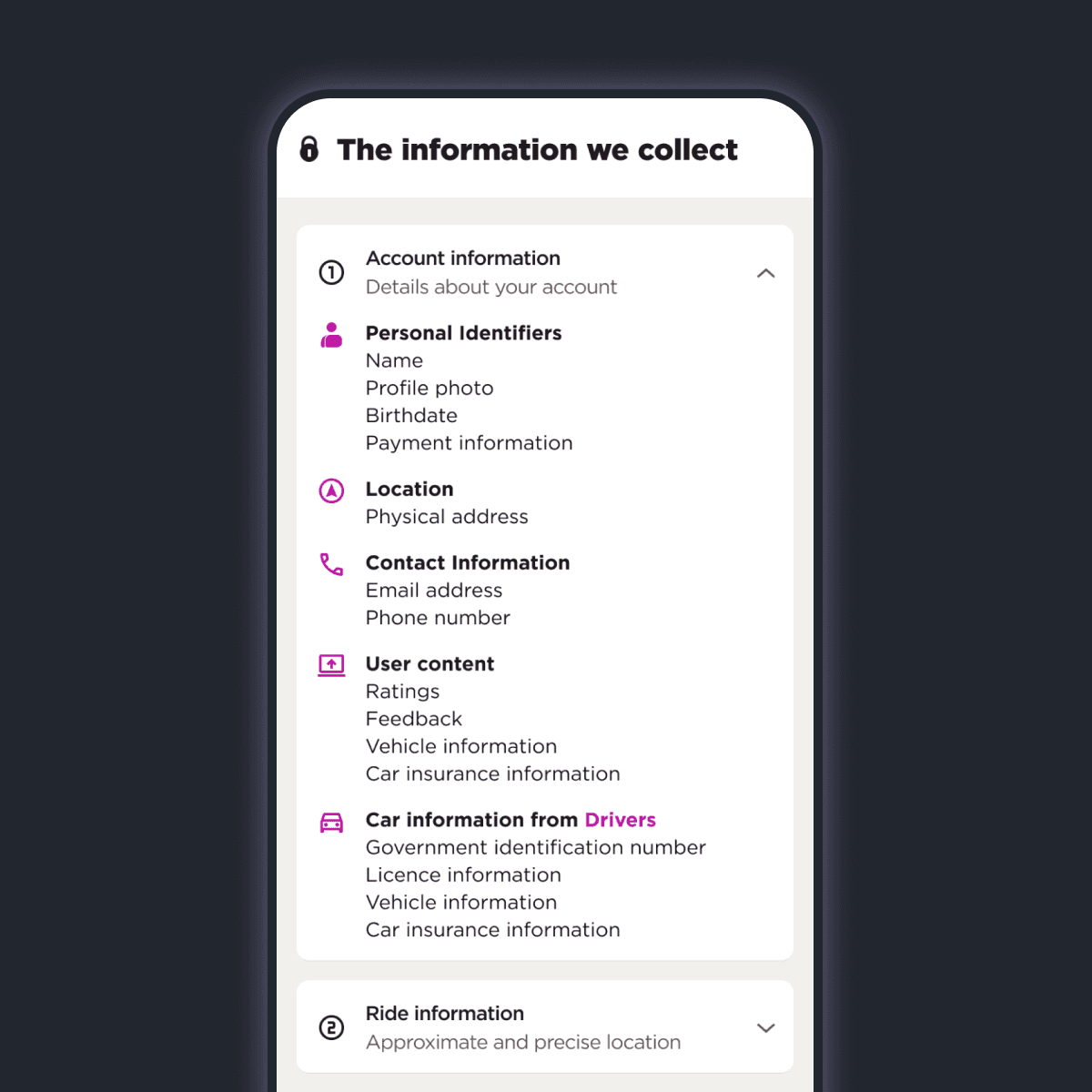
Default state: open
Done to pique user interest and show how information is displayed in a simplified way. This is meant to encourage users to explore and open the following 2 banners.
OUTCOME
68% Users feel positively using the new "Data & Privacy" page
The final solution improves how users interact with Lyft’s privacy and data information by making it more structured, intuitive, and easier to navigate.
Next
Product design
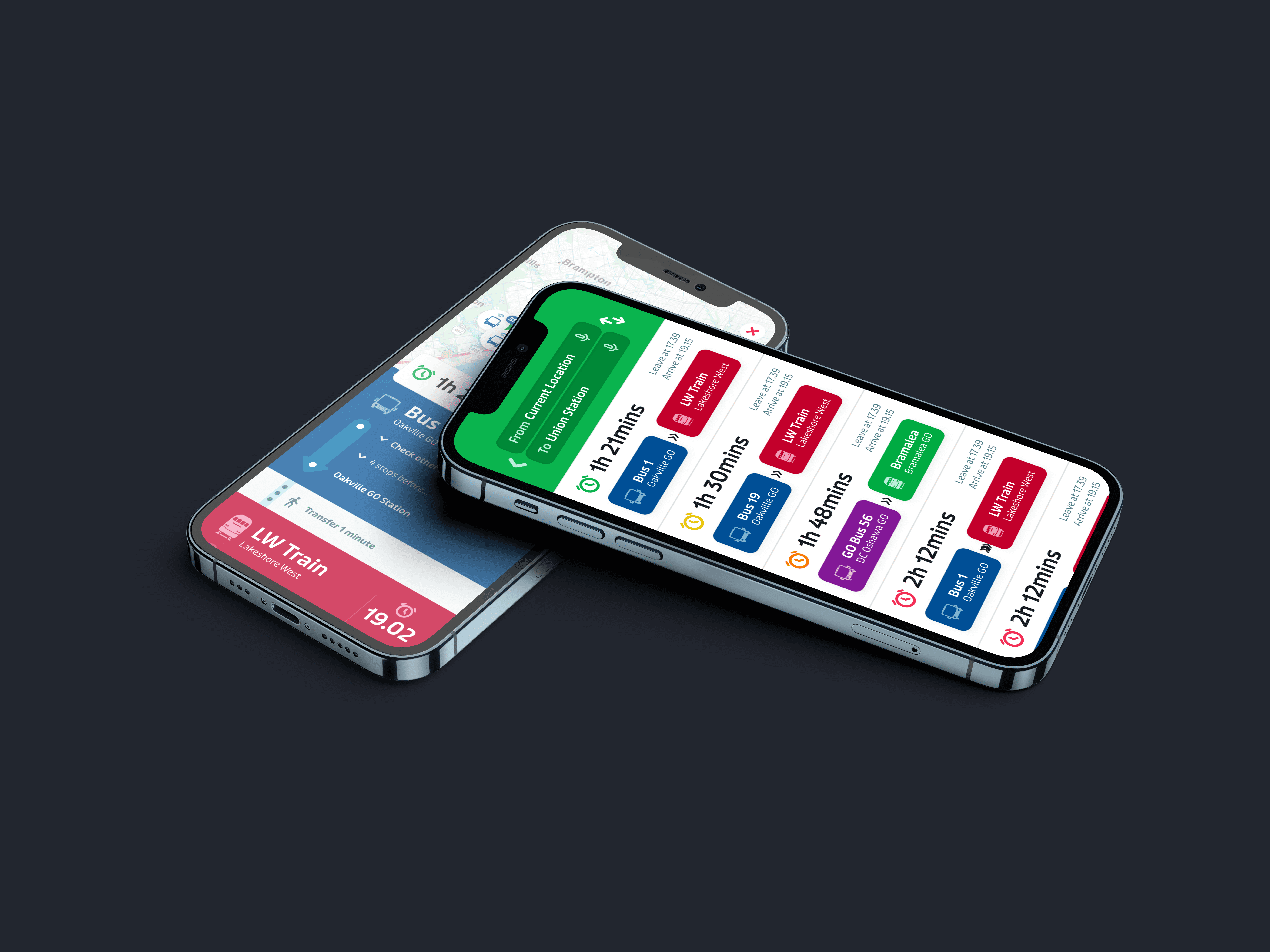
Rethinking Transit Accessibility for Older Adults
Redesigning the Transit app with accessibility features to reduce user cognitive load while maintaining usability for older adults and everyone in between.
" transform="translate(4.353 1.982)" width="39.963302752293565px"/></svg>)