Rethinking the Transit experience through the lens of accessibility for older adults.
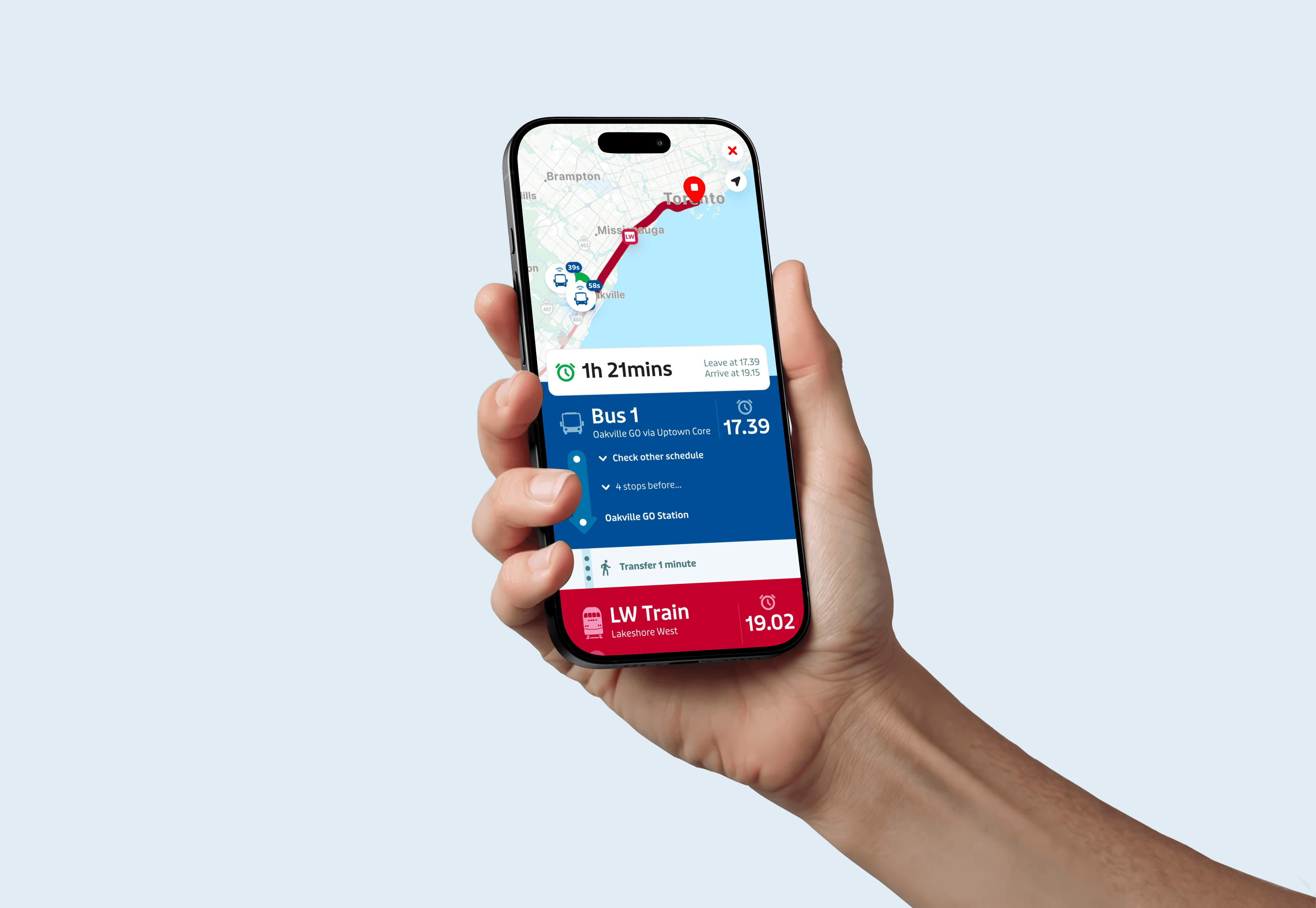
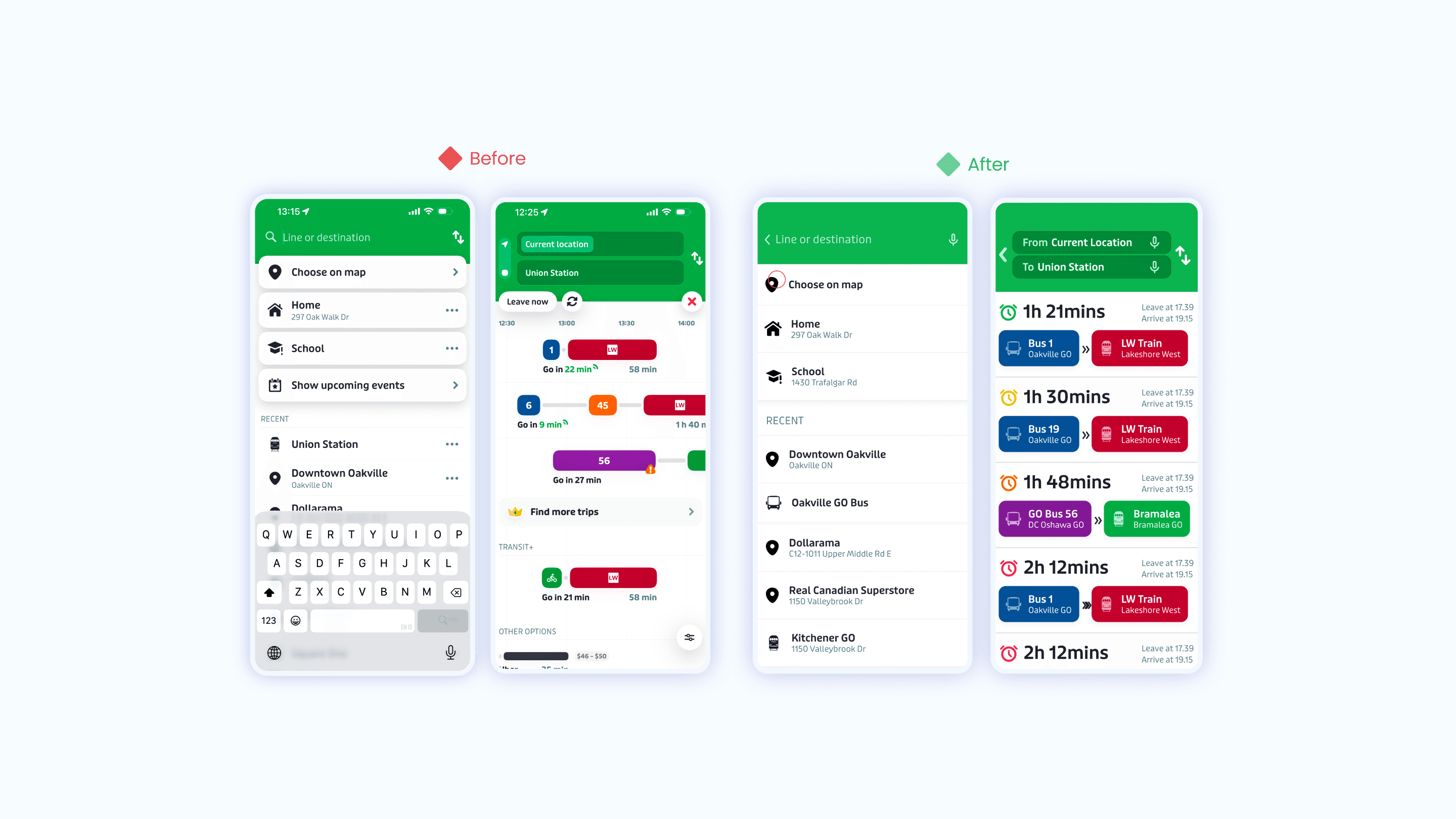
Simple mode aims to reclaim independence for older adults in their daily lives. It offers a simplified interface that highlights critical information and minimizes mistakes. Older adults can navigate more easily and make quicker, more confident decisions with a reduced cognitive load.
ROLE
UI/UX Designer
Product Design
DISCIPLINES
Interaction design
UX research
Prototyping
TOOLS
Figma
Illustrator
ProtoPie
TIMELINE
3 months
THE PROBLEM
The interaction-heavy interface makes evaluating multiple routes and quick decision making difficult with constraints
Despite its innovative graphics, usability testing and interviews revealed how different features make it difficult to process information and choose a route under constraints that affect their cognitive load.
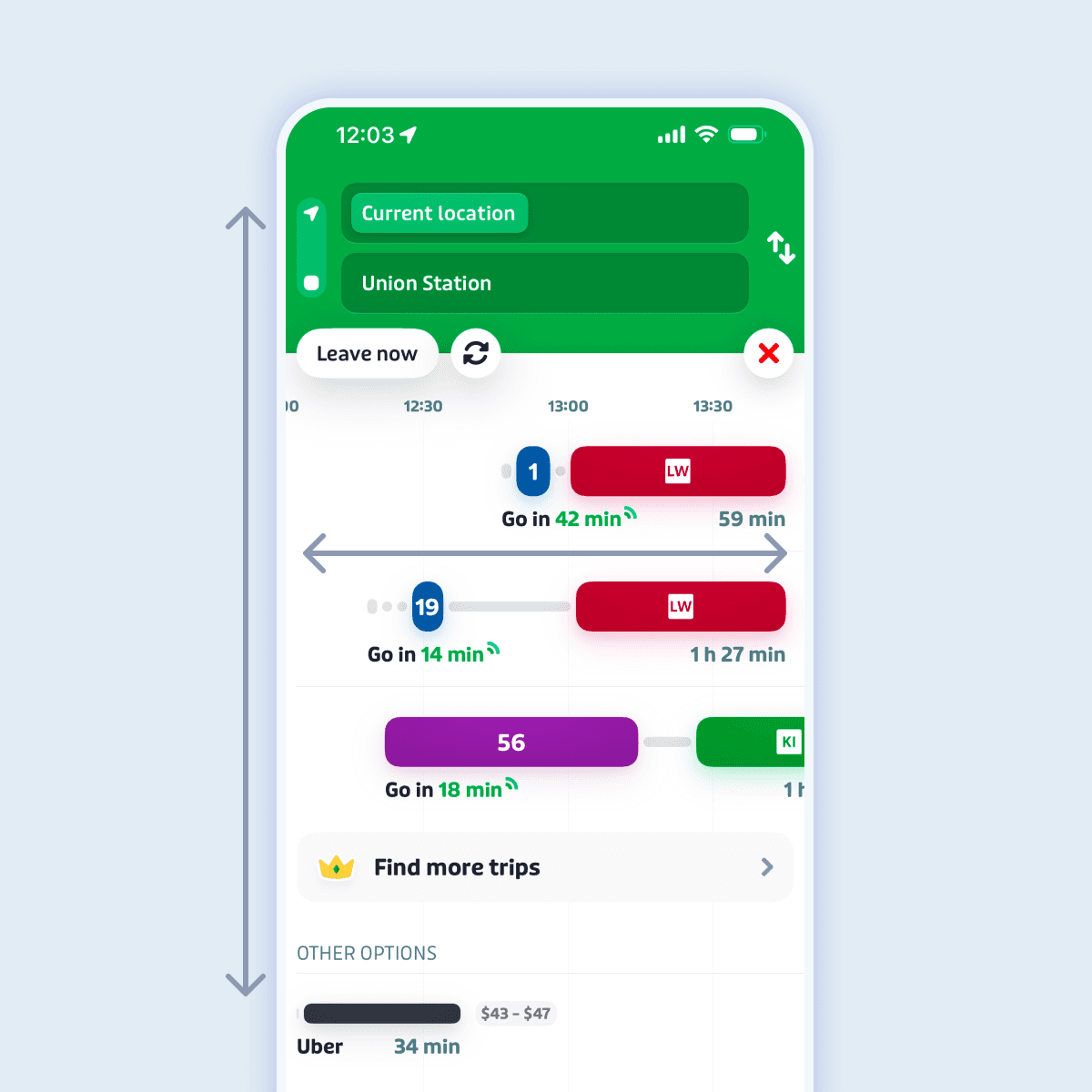
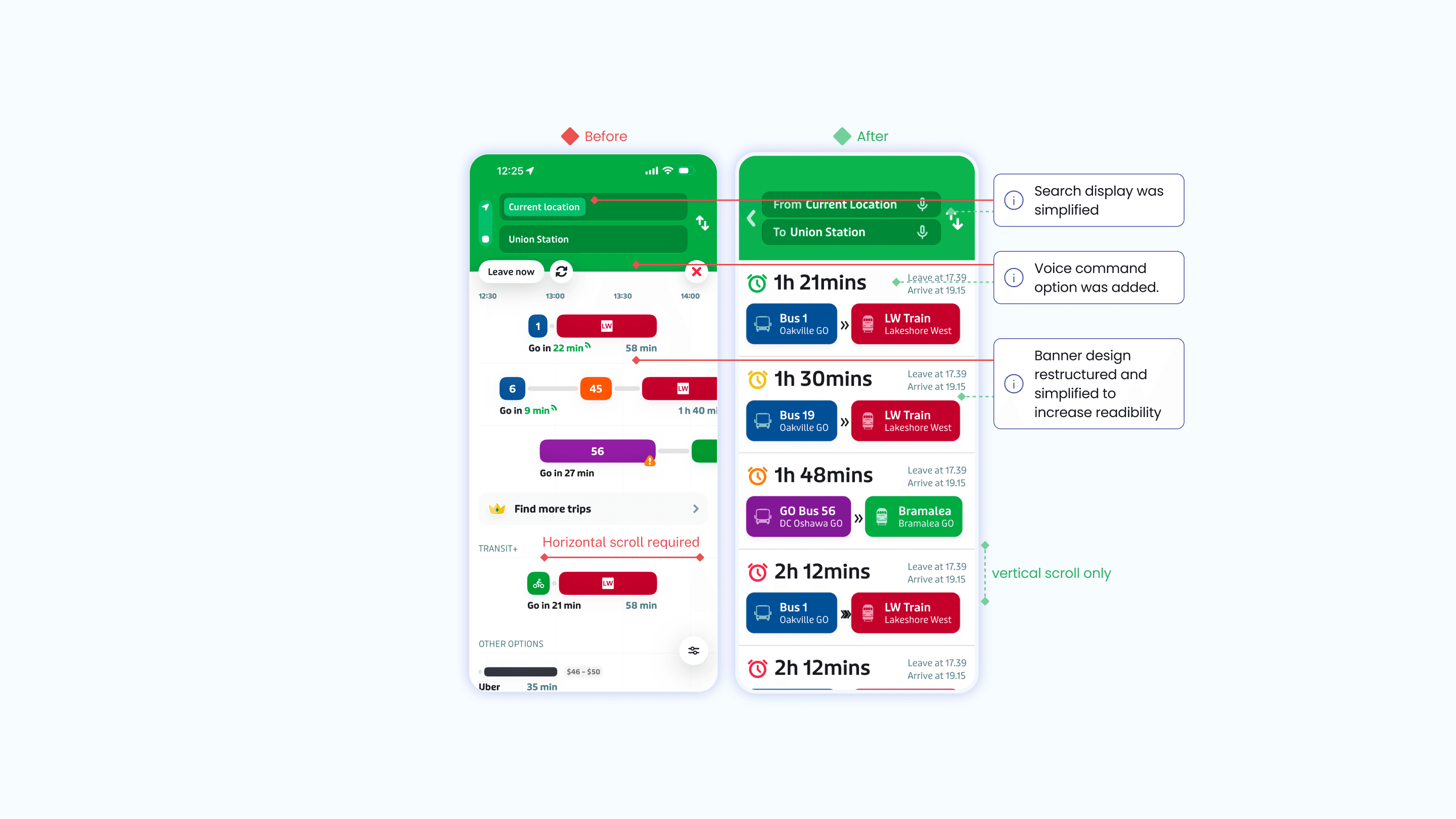
Horizontal scroll within vertical scroll page confused users
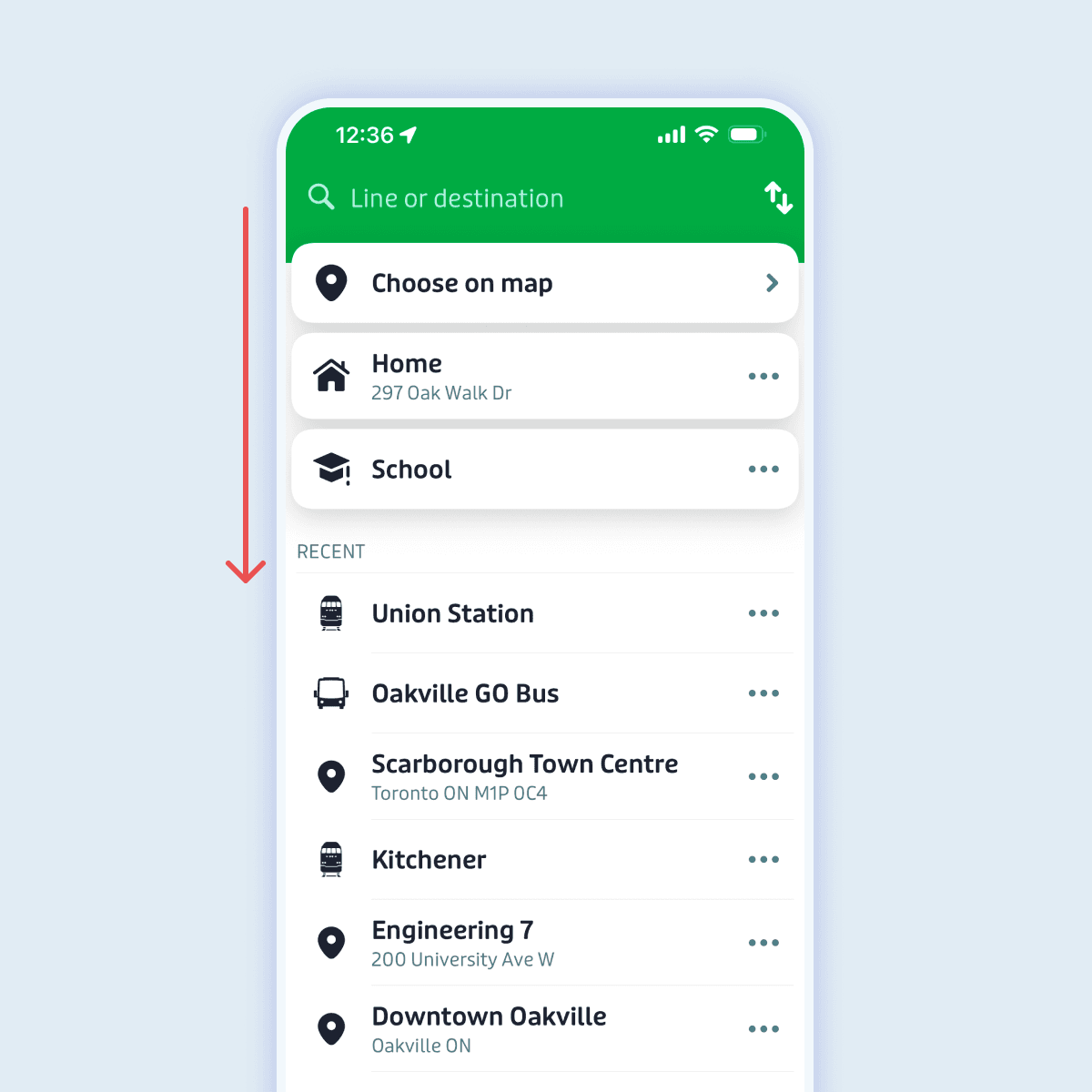
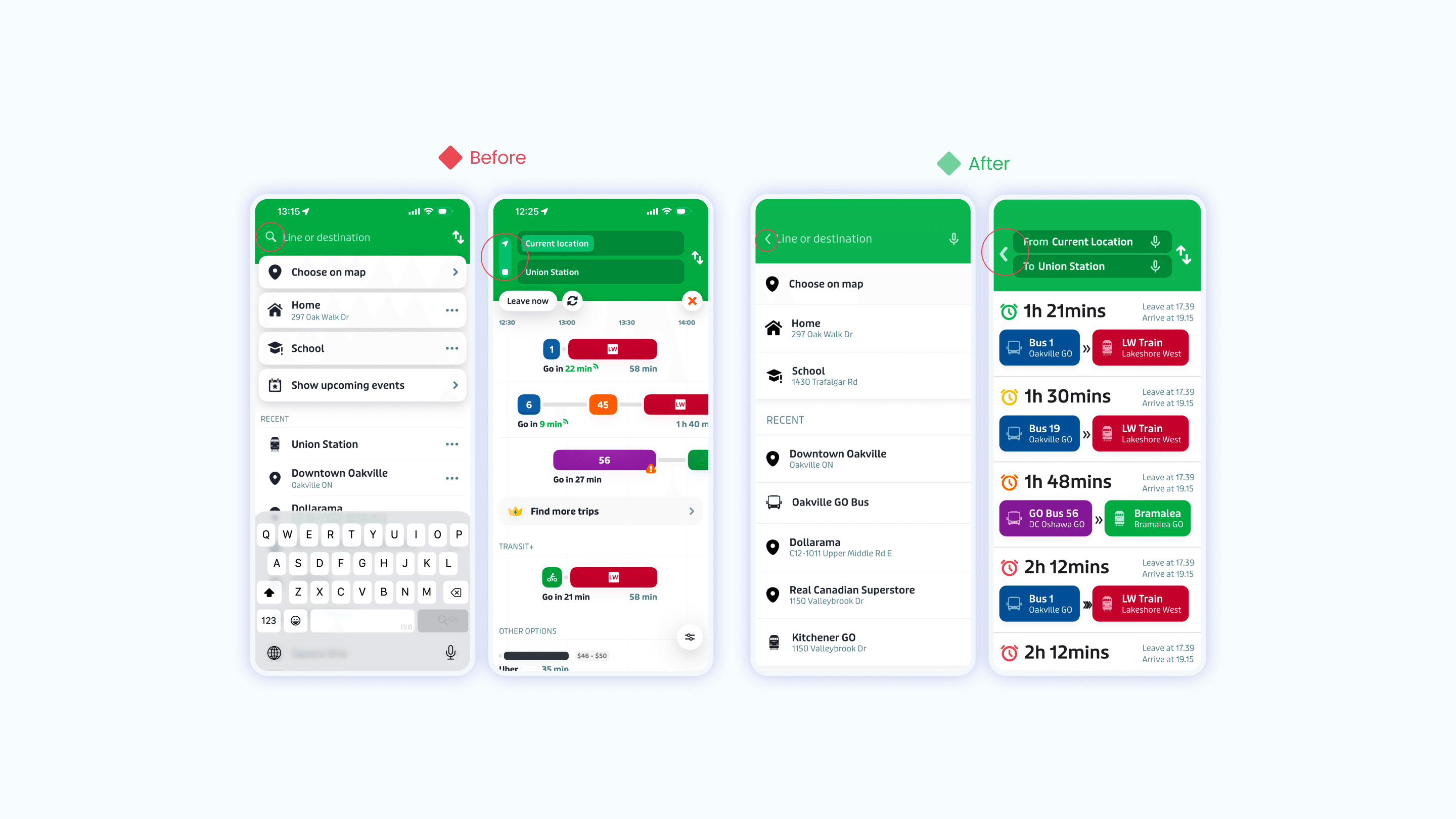
Gesture based exits caused accidental exits
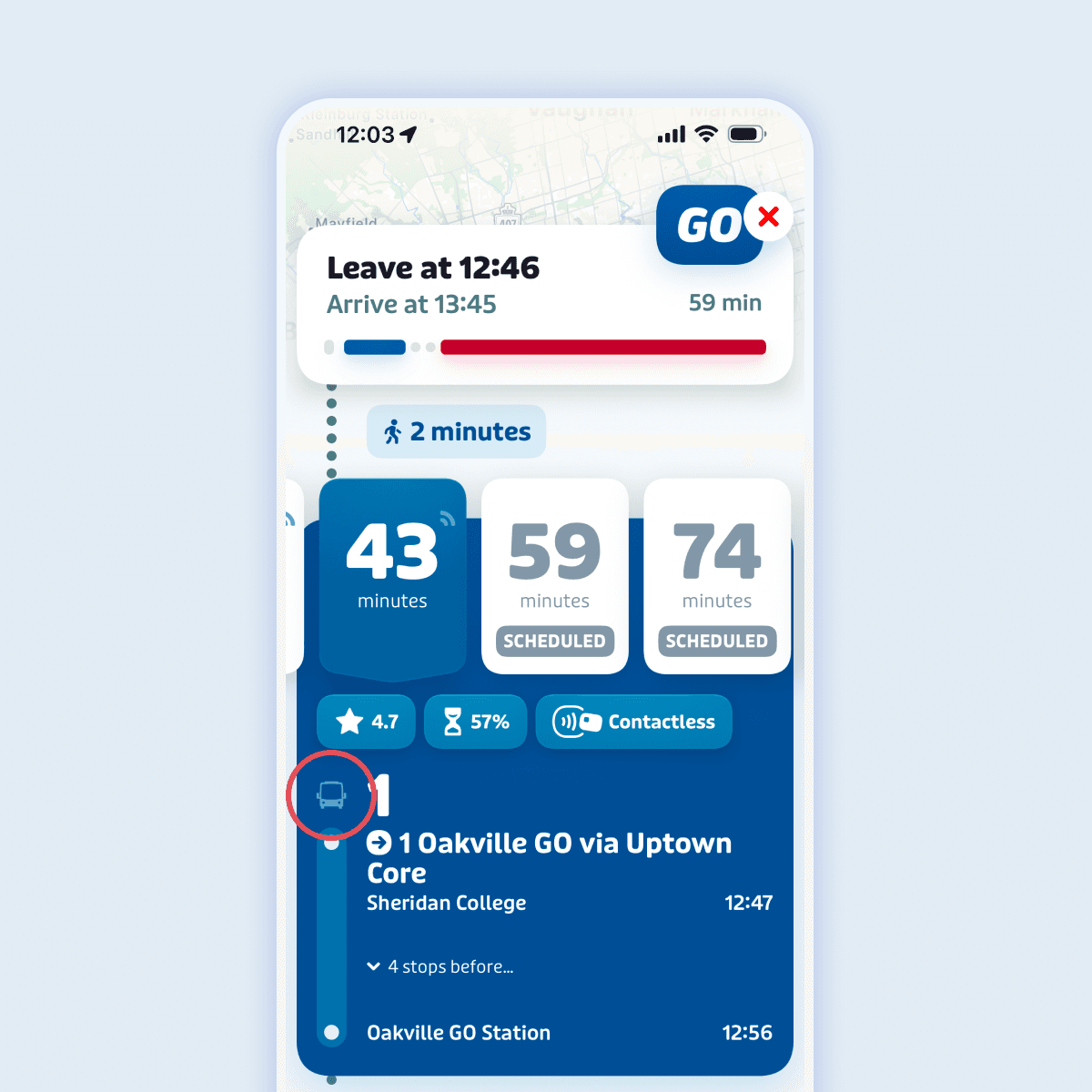
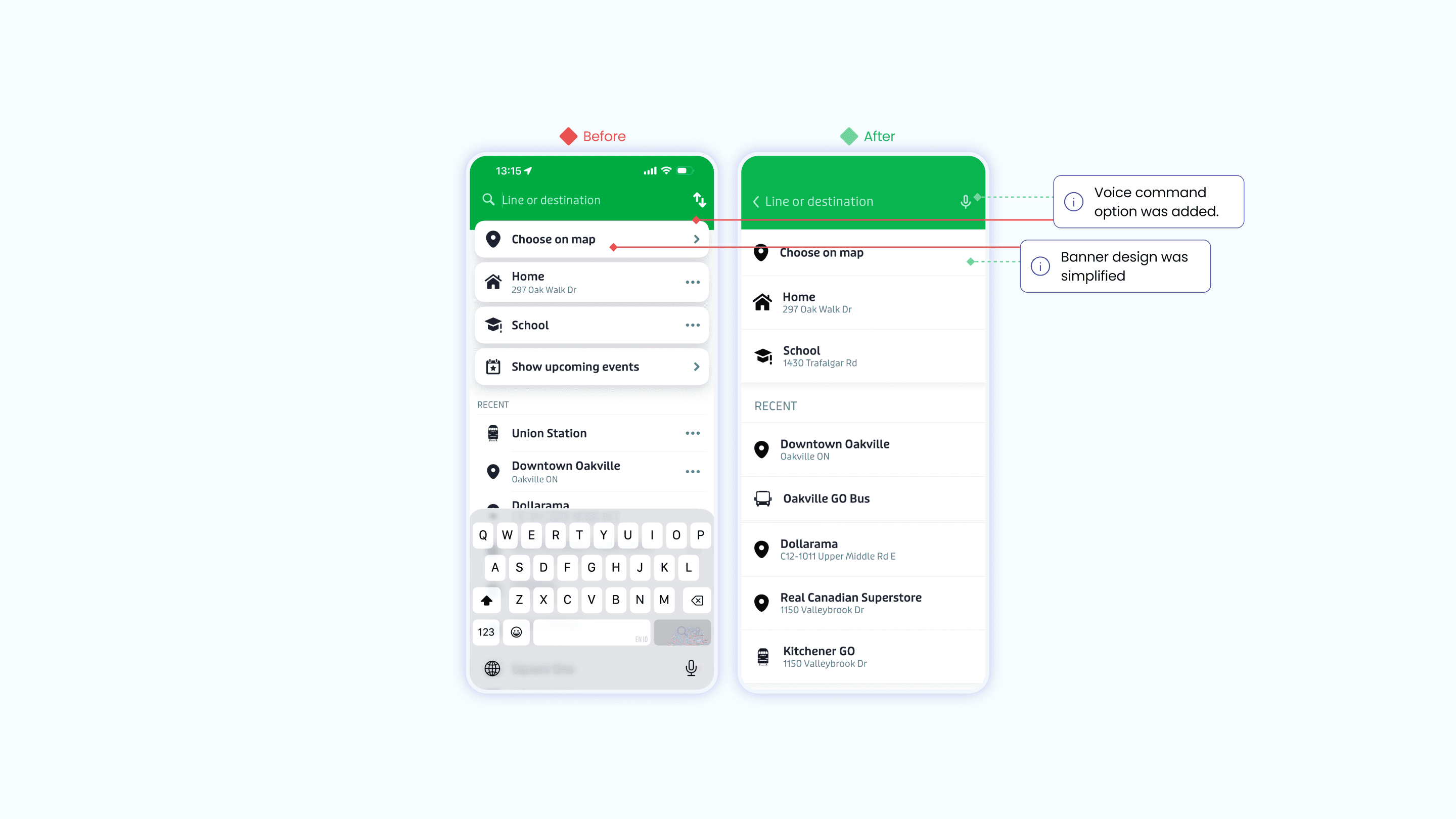
Smaller icons are difficult to identify
FINDINGS
Users with cognitive challenges struggle to navigate the app due to multiple gesture based interactions.
HOW MIGHT WE
Simplify the user interface of the transit app while retaining necessary information?
DECISIONS
Accessibility features added
The final solution addresses a mismatched interaction surrounding situations or permanent conditions that reduces user’s cognitive load. The challenge was addressed by creating a simplified version of the Transit interface and adding a voice command feature.
OUTCOME
76% faster decision making times, 60% less mistakes
Post usability testing and interviews with participants revealed they could identify a route faster, answer post test questions more accurately, and made less user error compared to the original interface when an increased cognitive load is simulated. This highlights the benefits of accessible design suited for different situations users encounter on a daily basis.
" transform="translate(4.353 1.982)" width="39.963302752293565px"/></svg>)